Sam's Health Blog
Excercise of the Month
Exercise of the Month
Every Month I will post a new exercise on this page to help vary your exercise routine and give your workout a new challenging twist.
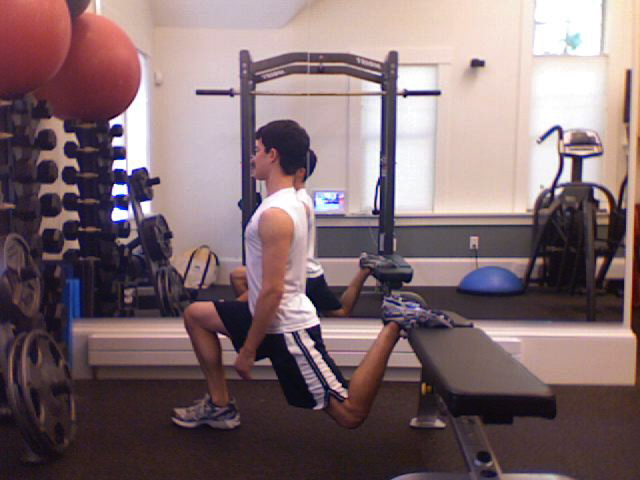
Split Squat
The split squat or Bulgarian squat is similar to a lunge motion however one leg is off the floor. You place your back leg (just the top of your foot is fine) on top of a bench behind you. You then position your other leg in front of you so that when u descend you make a 90 degree angle with your front knee. This exercise is great because it isolates front leg and requires some good balance. You can do this exercise with weight, just hold it up at chest level. However I recommend trying it without weight for the first few times because you will most likely loose your balance a few times. Here are some pictures of me doing a split squat:

Here are some past Exercises of The Month
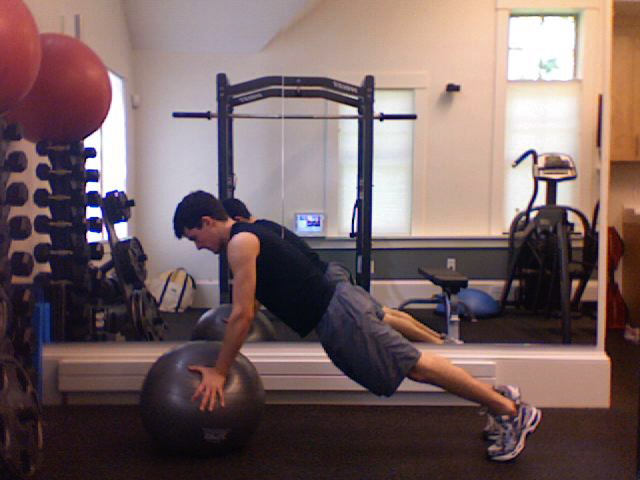
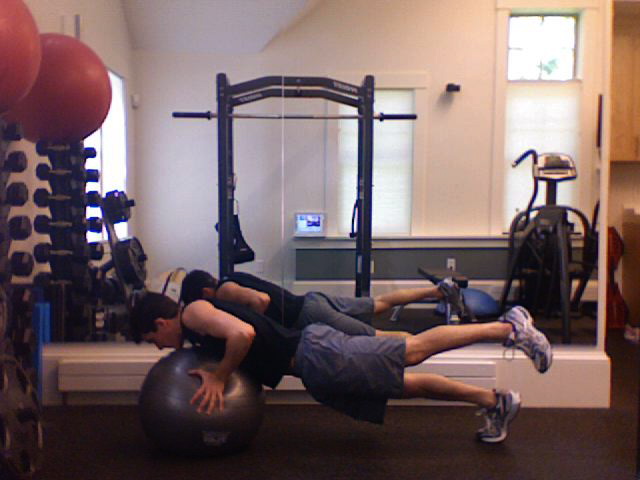
Asymmetrical Physioball Push-up
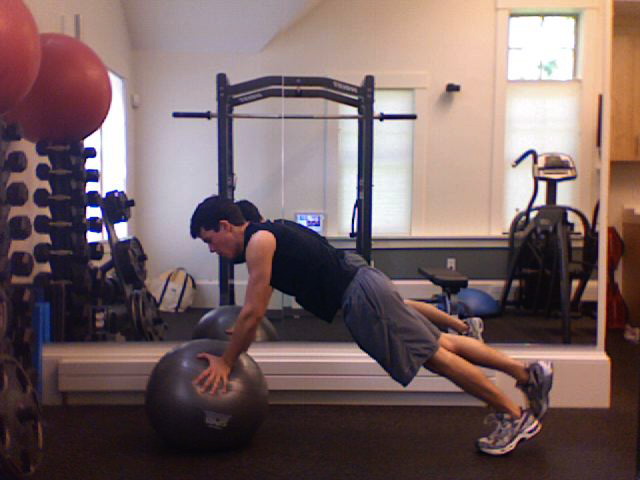
This is a Functional based exercise. This exercise will strengthen your core as well as balance in addition to the regular push-up muscles (pectorals, triceps, etc.) To perform this you will need a physioball/stability ball (one of those big bouncy rubber balls.) So with your physioball you are going to assume a push-up position with your hands about three-quarters of the way up on the ball, your hands just before the middle of the ball (your finger tips should be at the center of the ball if it were to be cut in half vertically.) and your feet on the floor. Unlike a regular push-up, there is going to be a bit more pushing away from your body horizontally. Your start position should have the top or middle of your chest above the edge of the ball (the edge closest to you.) You are then going to slowly and in a controlled manner lower yourself closer to the ball so that your stomach (or chest depending on how far back you start) touches the ball (about the same place your chest was above in the start position.) You are then going to raise your body back up until your arms are fully extended (but not locked out.) But here is the tricky part: this is an asymmetrical exercise because you are only going to put one leg on the ground. Keep the other leg straight out with a slight bend in the knee, and keep it there throughout the entire exercise. To increase the difficulty of this exercise even more, use a smaller physioball. Here are two video of a regular physioball push-up: 1 and 2.
Bent-Over Row
This is a great compound exercise for the development of your back; the bent-over row employs many back muscles (latissimus dorso, teres major, trapezius, infraspinatus, teres minor, posterior deltoid, and rhomboids) as well as muscles in your arms (bicep brachii, brachials, brachioradials.)Strengthening your back is extremely important. Neglecting your back (like so many do) results in a muscular imbalance between the back and chest. Every time you push away from your body you are using your chest, and every time you pull towards your body you are using your back — aren’t both important? When one is significantly weaker than the other, you are much more prone to injury.
So this is how to do the bent-over row: with your weight/s (this can be done with a barbell, dumbbells, cables or machines) in hand (you can use an overhand, underhand, or , if using cables or dumbbells, a neutral grip) you should assume a flexed hip position so your back is perpendicular to your legs, which are slightly bent. You then pull the weight towards the middle of your torso. You can pull the bar to your belly button or to your pectorals depending on which muscle groups you want to put the most stress on. You should finish your movement when the bar is at your rib cage. You then lower the weight until your arms are straight in a controlled manner. Throughout the entire exercise it is important to keep your back flat and not allow it to round at any point. Additionally, do not use your hips or legs to lift the weight. Visit here for a video of how to do this exercise.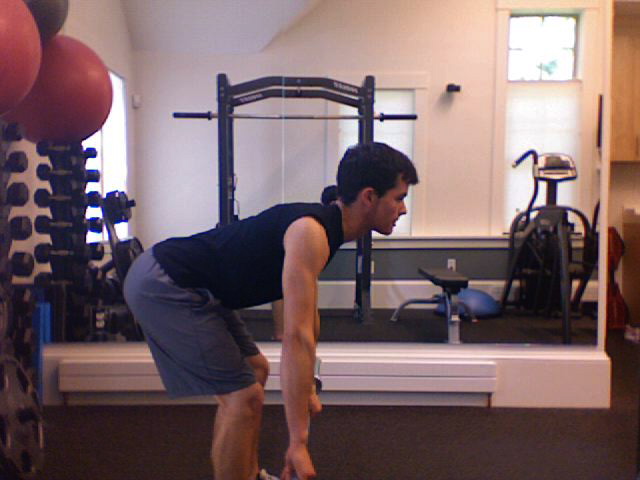
Deadlift
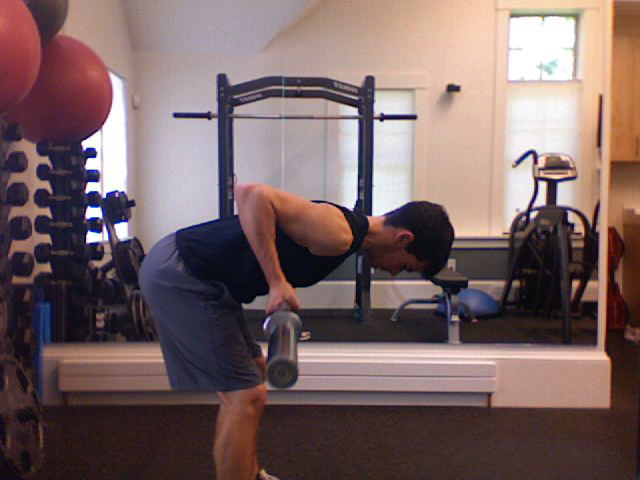
This is one of the best exercises for overall body development. The primary muscles used in a deadlift are the erector spinae, the gluteus maximus, adductor magnus (triangular shaped muscle on the side of your thigh,) hamstrings, quadriceps, and the soleus (the inner muscle of the calf.) However, there are numerous secondary muscles used when performing the deadlift Rectus abdominis (under aponeurosis,) Abdominal external oblique muscle, Iliocostalis, Intertransversarii laterales lumborum, Latissimus dorsi, Levator scapulae,Longissimus, Quadratus lumborum, Rhomboideus major, Serratus posterior superior, Serratus posterior inferior, Splenius cervicis, Teres Major, muscle, Gluteus minimus, Piriformis, Superior gemellus and digitorum profundus. I am not expecting you to know all of what those are, but basically they cover your back, your abdomen, your backside, and your forearms. The point is this exercise is a full body, core exercise. For the time and effort involved to master it and do it, you'll be much stronger.
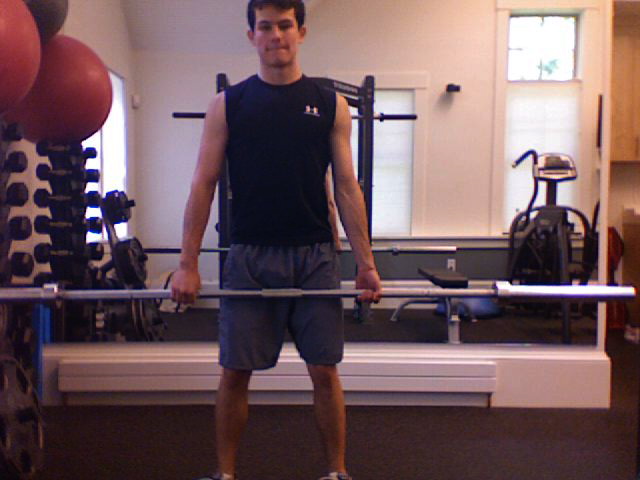
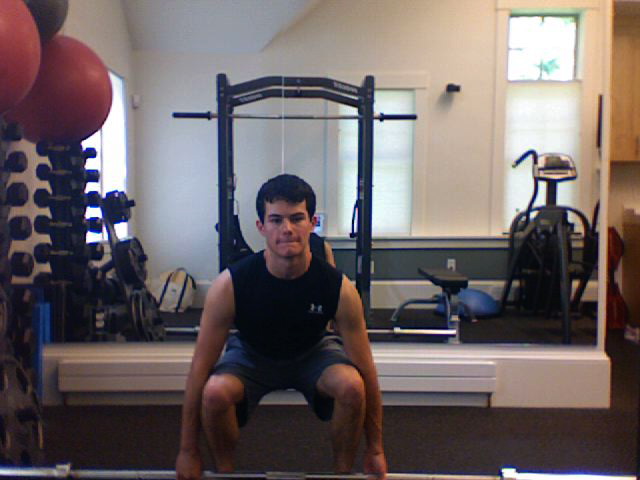
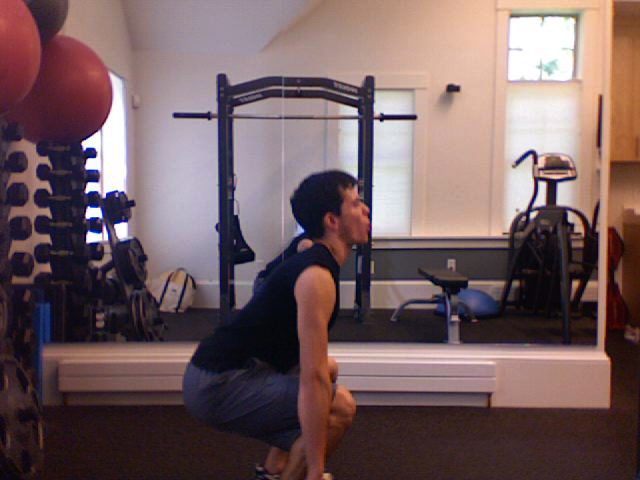
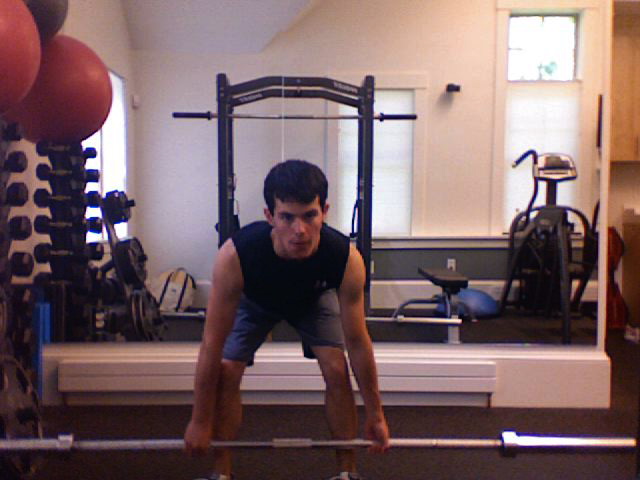
Before I explain how to perform the deadlift, like all excercises, you must be careful when doing this. Similarl to squats, make sure you keep a flat back throughout the exercise (notice a trend here?) and you can check this by making sure that you are looking up and straight ahead--not bent over staring at your feet. This exercise does put a lot of strain on your back. For some people if this is too much there are variations, which I will explain at the end. So, as for all exercises, perfect your form first. The first time you do this go easy on the weight. Now, onto performing a deaddlift. I usually use a dumbbell when I do these, but barbells are fine. Place your dumbbell onto the ground. Step up to the bar, placing your feet about shoulder width apart under the bar. The bar should be over the balls of your feet. (if you are using barbells just pick them up and hold them in front of your body with your arms hanging. ) Now bend down and grab the bar, keeping your back straight the entire time. It is sorta like a squat movement except your torso is more forward and closer to the ground. To grab the bar I like to use an alternate grip. This means one hand is over hand and the other is underhand. You can use an overhand grip but I find it uncomfortable and less stabilizing. Many power lifts use something called the hook grip. It is like and overhand grip but the thumb is on the inside. This allows heavier weight to be used with less grip strength. However this position is very uncomfortable for your thumb, but many power lifters say this discomfort passes with time. As you lower your hips make sure to keep the lower part of your legs almost vertical, and let your thighs drop tp about a 90 degree angle with your lower legs. Again, make sure you don’t round your back. When you do this don’t worry if you feel like you are sticking out your butt too much, that’s supposed to happen. Just use the weight as leverage so you don’t fall over. On the way up, the bar should travel in a vertical path. Push up through your legs moving your back and hips at an equal pace until you are at a standing up position. Make sure you are letting the bar hang, but don’t round your shoulders. Now lower yourself back down making sure to keep your form perfect. A lot of people get close to the ground and round their back to get the weight back to the floor — don’t. Some people use the Valsalva method (see working out page) to keep their back and abdomen rigid but as this increases your blood pressure immensely — don’t. Some people also use a back brace, however this doesn’t allow for stabilization muscles to develop. And these are the reason to master the exercise. Lift less weight; do it with perfect form, and become stronger.
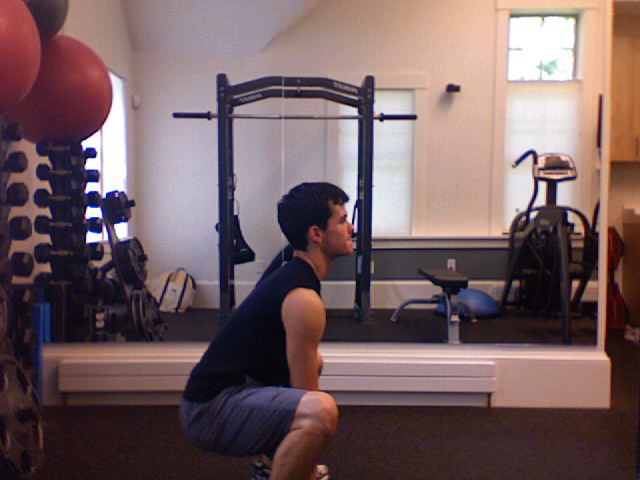
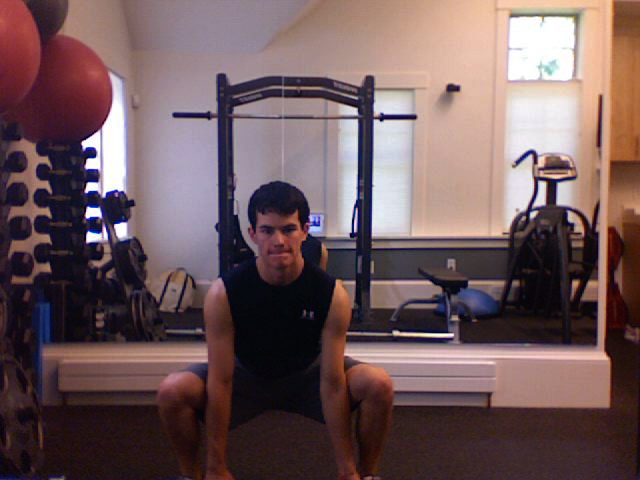
There are a few variations to the deadlift. The two most common are the Romanian deadlift and the modified or sumo deadlift. The Romanian deadlift emphasizes the hamstrings and glutes. You keep your legs in a slightly bent position at all times and the movement is mainly in the hips. The bar is only lowered to knee level and back up. There is less of a standing motion in this variation, more of a straightening motion. The modified or sumo deaflift is performed with your legs farther apart and your arms reach down inside your legs, hence sumo. This variation puts less stress on your back. Additionally people with large waists or long torsos and shorter arms may find this variation easier. For a video of how to do a deadlift, click here
Regular deadlift:(notice the hand grip)
Sumo-deadlift:
Romanian deadlift:
Hanging knee raises
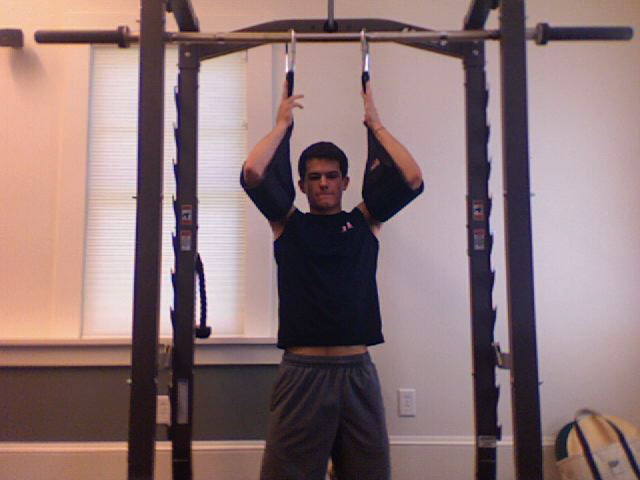
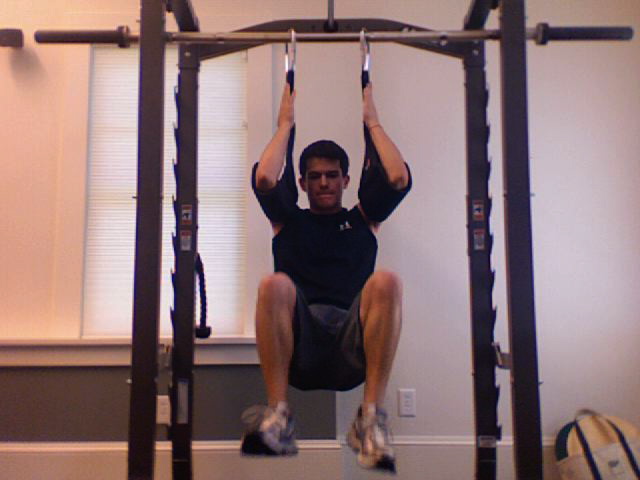
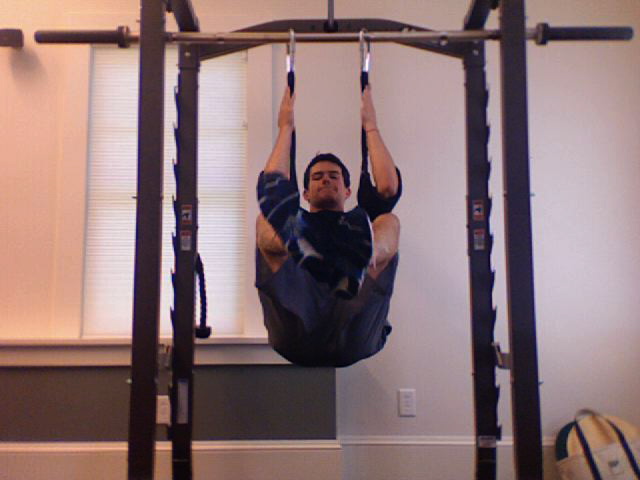
This is a great abdominal excercise for people of all fitness levels. It can be done with either a captain's chair, arm straps (hanging from a bar), or just a pull up bar. You begin by putting your arms in the straps (or whatever you are using.) Now you are just hanging there. Then, what you want to do is contract you legs upward towards your chest with your knees bent. For beginners start by trying to raise your legs so you are in a sitting position (the upper part of your legs are parallel to the ground with your knees bent at 90 degrees.) If you think you can raise your knees higher then go for it. As you raise you legs higher curl your lower back up with you so you aren't straining those muscles. For a nice twist, rotate a bit to either side and crunch up using your obliques. This excercise is sure to add strength and tone to your abdominals in ways crunches never will. Because (as you will find) these are much harder then crunches they will promote muscle growth much more. Too many people to hundreds of crunches and never notice any results - they just platue. You need to train your abs and obliques like you do with all your other muscles: less reps, higher intensity. You would never do 130 bicep curls, right? So why do endless crunches? For a video tutorial of how to do these visit here
I use arm straps to do hanging knee raises. You will notice that I have to ending positions. The second one is harder and works your abdominals more intensely, but remember to roll your lower back with your hips so you don't hurt yourself.
1.
2. 3.
3.
Squats
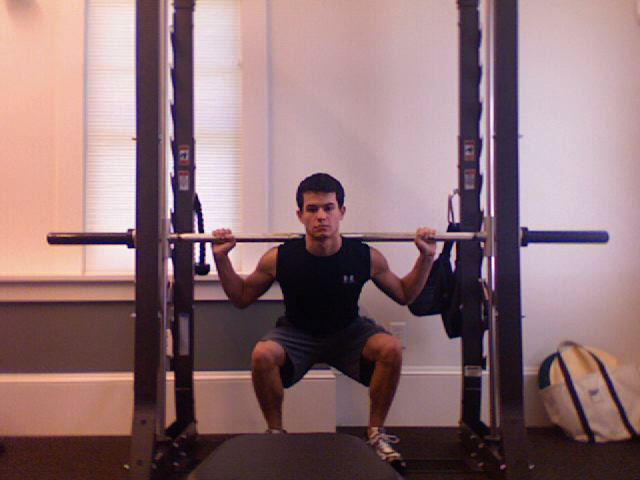
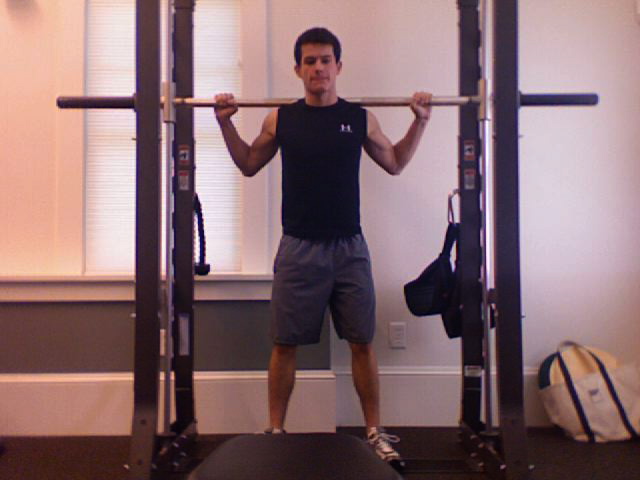
Since it is skiing/snowboarding season I decided to write about an exercise that will help with balance and prevent that day after quad soreness. This is a great exercise for everyone because it builds core strength. Keep in mind that form is extremely important for this exercise in order to prevent degradation and injury. Here is how to do it: This can be done with weight or without. Stand up straight with your feet about shoulder width apart. Extend your arms straight out in front of you and descend slowly keeping your weight on your heels (which may be hard balance-wise, but that's why you have your arms out straight.) As you bend down make sure you knees stay over your toes and not farther forward. At the bottom (which is about when you can't keep your form anymore - so it differs for every person but its about when your upper legs are parallel to the ground) Then push back up from your heels and repeat. Concentrate on keeping your back straight throughout the squat. For a full step by step run through visit here.
Here are some pictures of me doing a squat to give you an idea.
This is the starting position:
And this is the ending position: